

Abridged version:
- From free bulky-waste pickups for residents to surveillance cameras overlooking empty lots known as “dumping hotspots,” Sacramento is trying to make legal dumping easier and illegal dumping harder.
- Limited code enforcement staffing and the difficulty of identifying violators make citations challenging.
- The city is reviewing its approach to illegal dumping following concerns raised by City Council members, who are expecting to review the issue later this month.
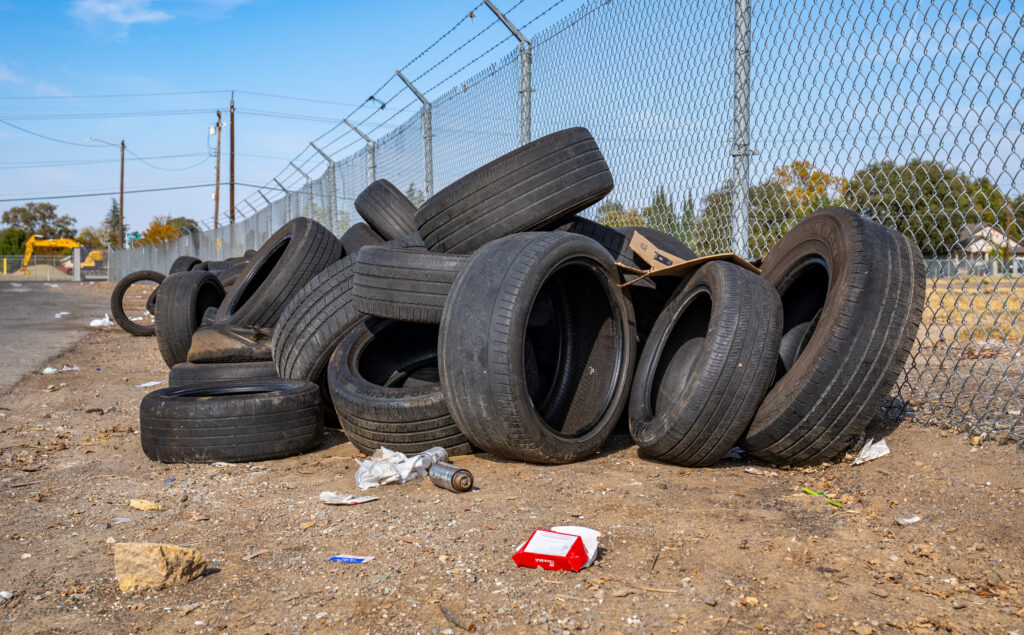
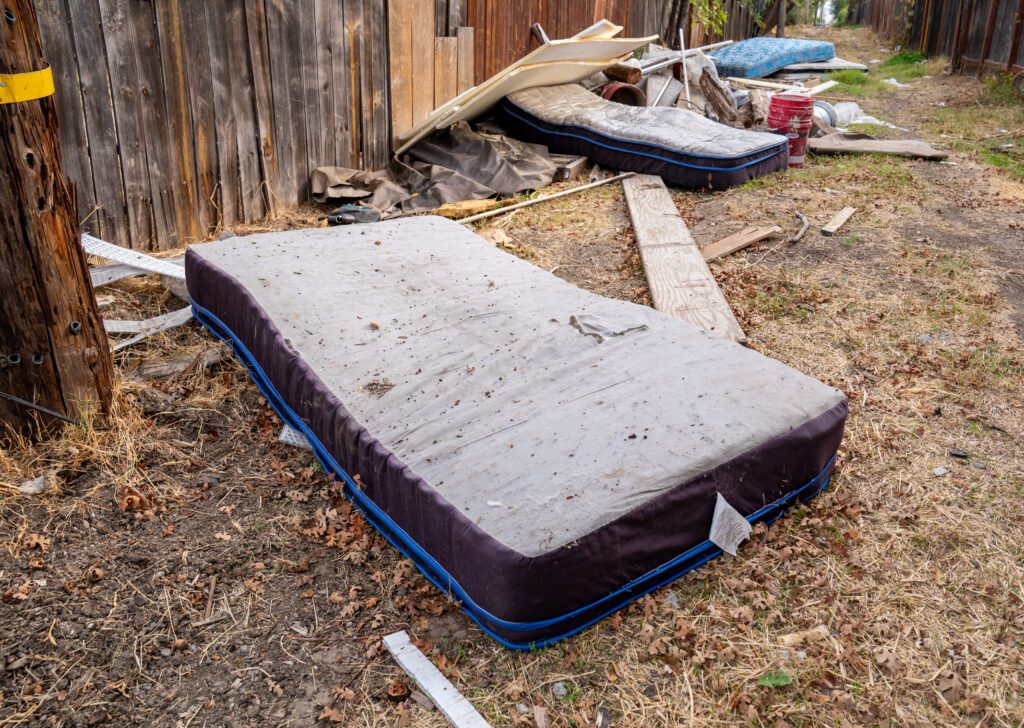
You’ve probably seen it: a worn-out couch or mattress abandoned on the road, or several tires left in an empty lot. Illegal dumping is a familiar sight in many Sacramento neighborhoods, and it’s been steadily increasing.
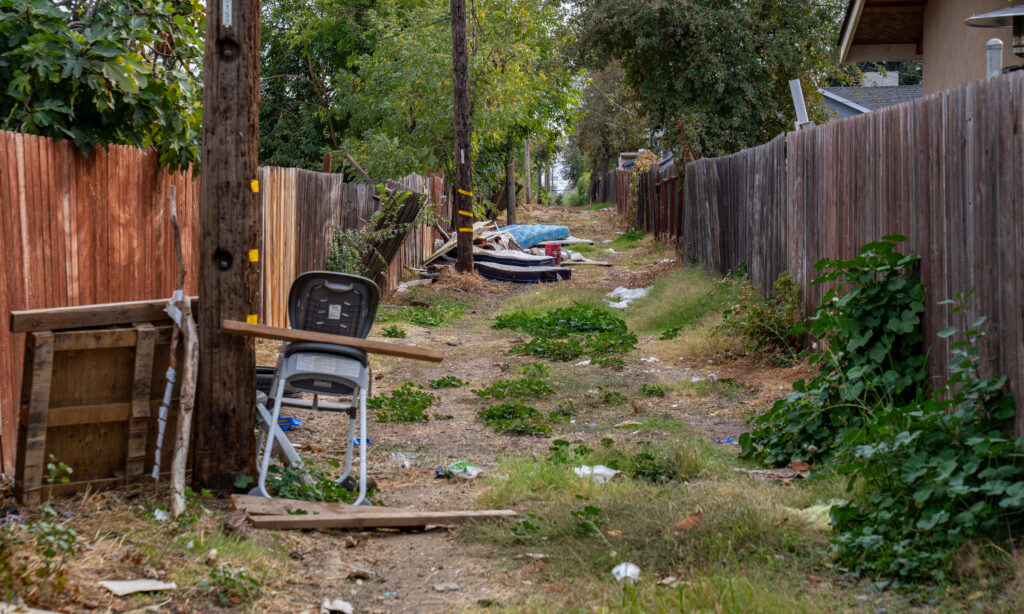
While the city offers many ways for residents to dispose of waste, illegal dumping remains an ongoing challenge. Unwanted furniture, appliances and other debris can become recurring problems in residential neighborhoods and along roads, empty lots and waterways.
The city monitors dumping hotspots and works to clear reported piles, but identifying violators and responding to every report quickly can be difficult. The challenge isn’t just cleaning up existing waste, but preventing it from building up.
“People see a pile and it just kind of builds on that,” said Jesa David, a spokesperson with the city’s Recycling and Solid Waste Division. “Blight increases blight.”
David Ingram, president of the volunteer-run River City Waterway Alliance, called it the “litter begets litter” phenomenon, which says the more trash people see in an area, the more likely they are to add to it.
Councilmembers Roger Dickinson, Mai Vang and Caity Maple proposed an illegal dumping analysis, expected to go before the City Council in November. The review will assess current efforts and find ways to improve education, enforcement and response times.
Areas hit the hardest
Illegal dumping happens across Sacramento, but some communities face a disproportionate share of the burden.
The amount of collected waste rose 28% in the last fiscal year, from 2,300 tons to nearly 3,000. Jennifer Wyant, the city’s mobility and sustainability division manager, said at an October Measure U committee meeting that 48% of illegal dumping 311 calls came from disadvantaged communities, which make up about 30% of the city.
Dickinson, who represents several north Sacramento neighborhoods, said illegal dumping is a daily occurrence throughout his district.
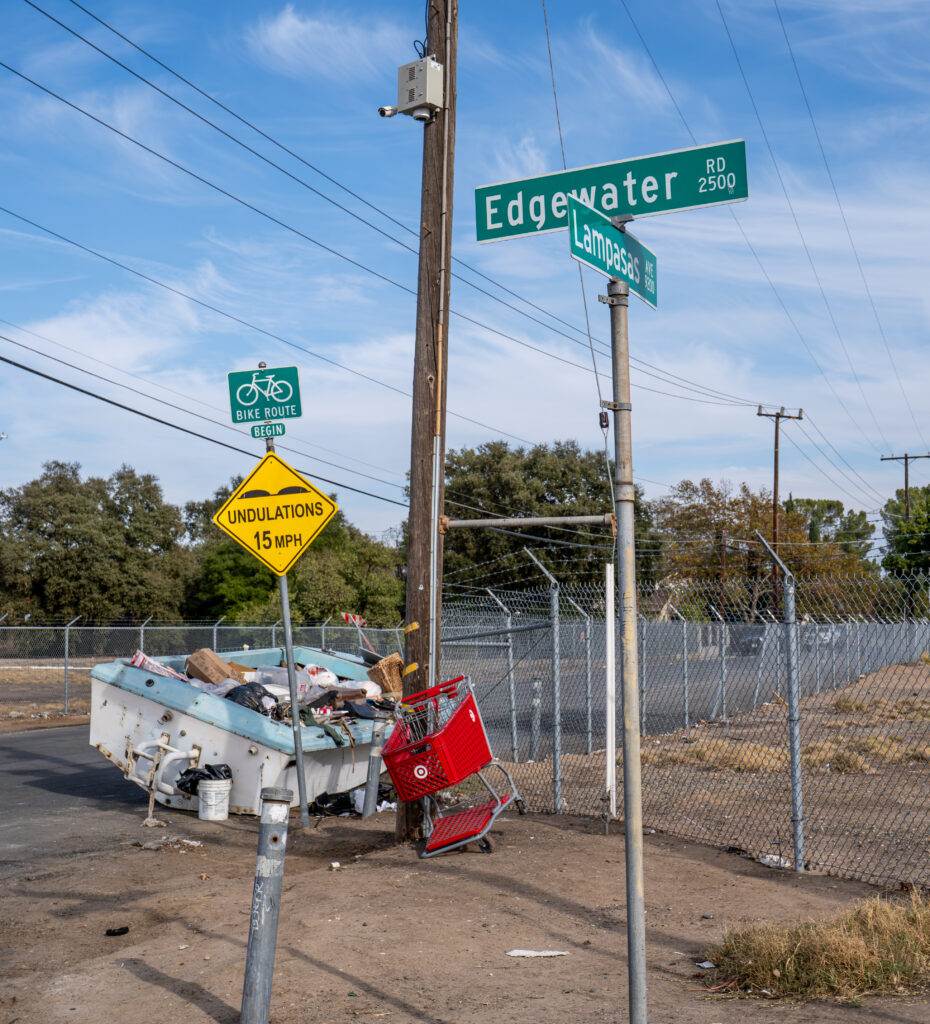
Parts of Rio Linda Boulevard and Roseville Road are considered dumping hotspots, along with the intersection of Edgewater Road and Lampasas Avenue. The city is considering closing the intersection because of persistent dumping and the resources needed to clean up the area.
“Historically, illegal dumping has been something that was kind of a second-tier concern,” Dickinson said.
Dickinson said he and other community members pushed the city to give the issue more attention and that slow responses can allow piles to attract more trash. The city aims to clean up reported piles within three days, and Dickinson said while the city has improved its response, piles can still be left for up to a week.
The problem also extends to local waterways. River City Waterway Alliance volunteers remove trash from areas such as Steelhead Creek and Arcade Creek, where they have encountered thousands of tires, hundreds of mattresses and millions of pounds of other debris. One mattress can weigh over 800 pounds once taken into the water.
“There is a nexus between illegal dumping and the amount of debris that we’re finding in the creeks and waterways,” Ingram said.
Ingram said waste on land can eventually reach waterways, harming ecosystems and accumulating in creek beds. About 95% of the waste the group removes is associated with homeless encampments rather than direct vehicle dumping, but it’s usually brought into the waterways after being dumped on land.
“We have folks living illegally inside the levees, and then we have folks illegally dumping just outside the levees, and the folks living inside frequently transport the illegally dumped items to their camps,” Ingram said.
Current approaches
In 2024, 311 received more than 9,400 calls related to illegal dumping. Of those, 1,458 were classified as actionable cases. The city closed 1,209 cases, issuing 11 citations, while some calls involved scheduled piles placed out too early.
A report doesn’t automatically lead to an investigation or citation. Investigators need enough information to identify a potential violator. David said the city has six code enforcement officers dedicated to illegal dumping and one full-time administrative employee.
The city typically has 15 to 25 cameras watching dumping hotspots. Staff use maps of reports to find problem areas and may move cameras when dumping declines. Since 2025, cameras have led to 25 citations, David said.
“The more people who report the better our data will be, and we can relocate cameras to be more effective,” David said.
The city also offers a reward program for information that leads to an illegal dumping citation or conviction. Residents can receive up to $1,000, but David said rewards are uncommon, partly because witnesses must identify themselves and sign a statement, so they forgo the reward out of fear of retaliation.
Dickinson said a recent change to the city ordinance intends to make enforcement easier by allowing witnesses to identify the vehicle or license plate used in illegal dumping cases, rather than having to figure out who dumped the waste.
Cleanup responsibilities depend on where the waste is located and its size. The Recycling and Solid Waste Division handles dumping in public rights of way when trash is accessible to the city’s claw tractor, while smaller debris and dumping on private property fall under the Department of Community Response.
David said the city has found that illegal dumping often happens within a mile of where the person responsible lives, suggesting the problem isn’t driven by people coming from outside the area.

Free disposal options for residents
Each year, Sacramento city residents receive a dump coupon for an eligible load, two free bulky-waste pickups and two free appointments for appliance and electronics disposal. Sacramento county residents receive one free pickup annually, while additional options depend on their location and waste service provider. Residents can drop off household hazardous waste, including paint, batteries, antifreeze and chemicals, at five free collection facilities in the area.
The annual dump coupon can be used at both the Fruitridge Road and North Area Recovery Station locations. Dickinson pushed to add the north Sacramento site so residents in his district wouldn’t have to drive across town to dispose of their waste. Both facilities accept mattresses and other household items for free year-round.
For apartments, which usually rely on private haulers instead of the city’s, use the city’s Dump Days to dispose of unwanted items for free.
Making these options more widely known remains a challenge. David said the city shares information through social media, newsletters, mailers and guides, and works with private haulers to educate residents, but not everyone knows what options are available to them.
“There are a lot of people who just don’t know that they have alternatives and the alternatives aren’t necessarily costly,” Dickinson said. “The more we can educate folks to those alternatives, the better off we’ll all be.”
What comes next?
A gap analysis is expected to go before the council in mid-November, assessing the city’s current efforts and finding ways to improve. That includes updating guides and materials to be available in multiple languages, David said.
The analysis follows concerns raised by council members earlier this year about whether the city’s response is as effective as it could be. Dickinson said the city needs a more coordinated approach that combines education, enforcement and faster cleanup times.
“In the last six months or so, I’ve definitely seen some reduction in the amount of illegal dumping that’s going on in the district,” Dickinson said. “There’s still far too much of it, but I think the solid waste staff, the DCR staff, the police department, code enforcement, everybody has responded in a way that I would hope.”
For residents, the immediate steps are simple: report illegal dumping through 311 as often as you can, use available bulky waste pickups and disposal coupons and check local rules before leaving your unwanted items at the curb.
“If you see a pile somewhere, it doesn’t just have to sit there. Let us know about it and something will be done,” David said.